Your emotional well-being is the priority. Find a safe and confidential space. Start your process of change today.
Sometimes the first step is the hardest, but you don't have to take it alone. I offer you a safe and judgment-free space to work on your mental health and regain your emotional balance.
100% Online
Video content, downloadable materials, digital resources
Unlimited Access
Enter the content as many times as you want without limits
Learn at your own pace
Whenever and wherever you want, without schedules or restrictions
Why is this module important?
We can think of anxiety as an alarm system. The problem arises when that system constantly receives signals of threat: financial problems, information overload, work pressure, uncertainty, social comparison, lack of sleep, etc.
Modern life has not necessarily created anxiety, but it has increased the number of stimuli that can keep our alert system activated.
And there is an important distinction: experiencing anxiety occasionally is a normal response, whereas an anxiety disorder involves persistent or intense symptoms that interfere with daily life.
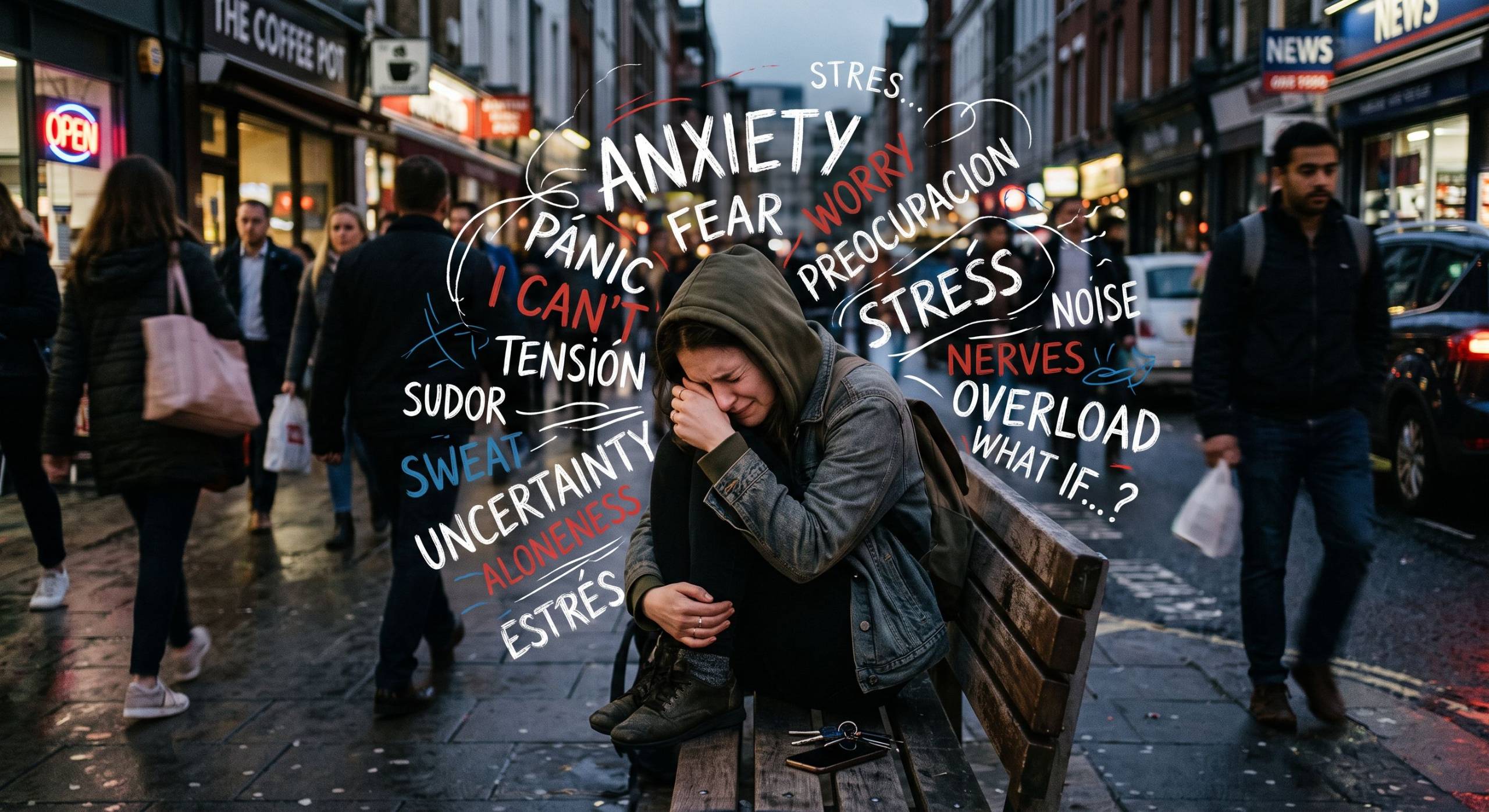
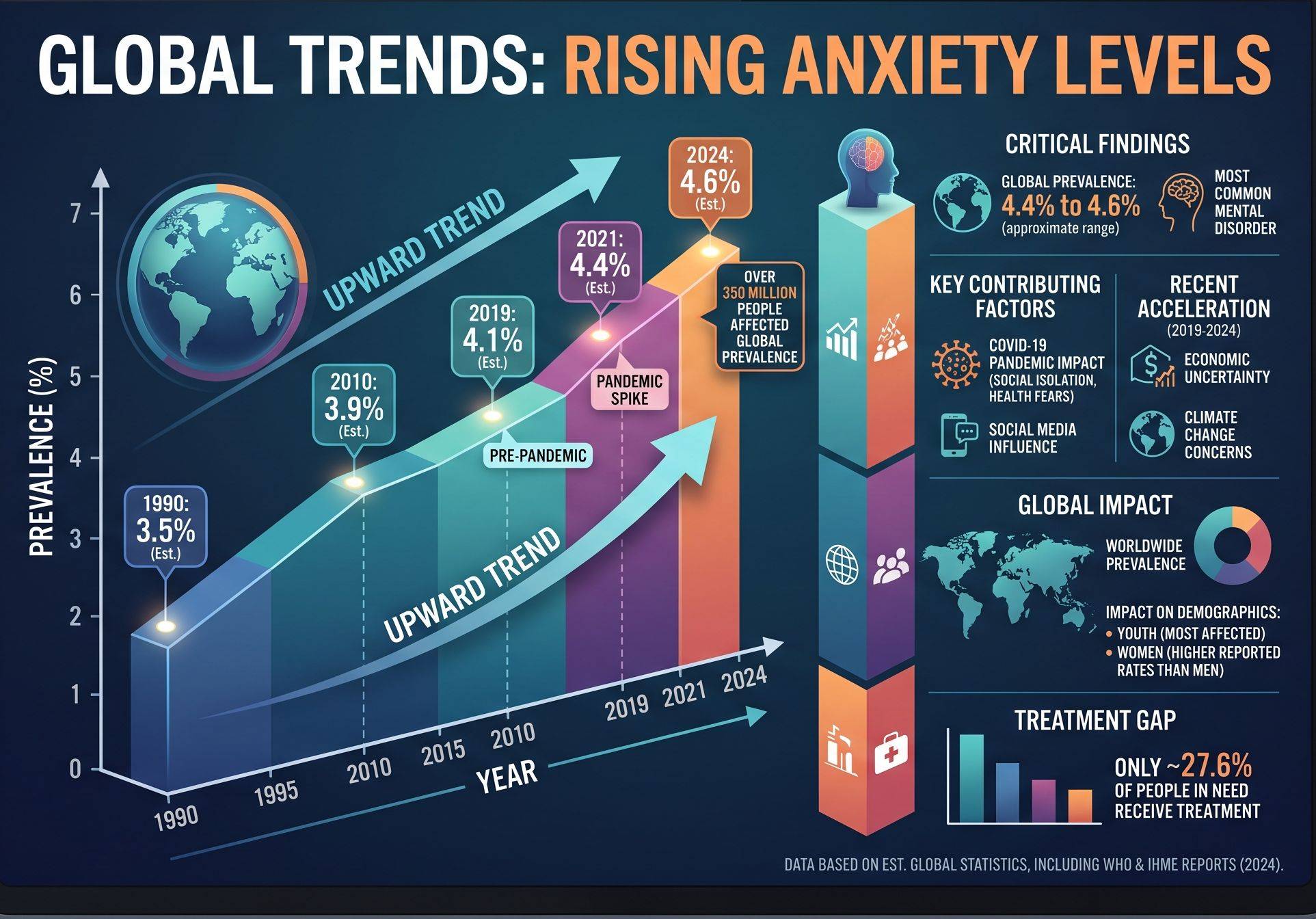
Anxiety levels have increased considerably in recent years.
- A global analysis covering 1990 to 2021 found that the age-standardized prevalence of anxiety disorders worldwide in 2021 was approximately 18% higher than in 1990.
- In the United States, CDC data show a statistically significant increase in anxiety symptoms between 2019 and 2022.
- In 2024, approximately 12% of U.S. adults regularly reported feelings of worry, nervousness, or anxiety, and nearly 19% had received an anxiety disorder diagnosis at some point in their lives.
- Globally, the WHO estimates that 359 million people were living with an anxiety disorder in 2021, making anxiety disorders the most common type of mental disorder worldwide.
Are you ready to get started?
Learn to understand your anxiety and develop tools that can help you manage it in a healthier way.